
Why Fresh Milled Flour?
Gluten sensitivity has increased significantly over the past 20 years, and many are advised to avoid gluten in hopes of reducing digestive distress and other health conditions. Approximately 30% of Americans are currently reducing or avoiding gluten, with research showing increased incidences of gluten-related disorders in both children and adults. But is it really the gluten? Or could it be the way our flour is grown, treated and processed?
Have you noticed more and more home bakers switching to fresh milled flour? So many people who have been gluten free for years are discovering that they can have foods made with fresh milled flour and not only feel good after eating it but also thrive and heal! I am one of those people! After being gluten free for nearly 10 years, my family switched over to organic fresh milled ancient grains and hasn’t looked back. Now I am passionate about helping others do the same, so they can enjoy bread and all of its healing benefits! Today, I want to share with you why freshly milled flour is not the same food as commercially processed white flour (even if it is organic!).
I first learned about the importance of fresh milled flour in my mid 20s. My pastor’s wife held a class, teaching us about the processing commercial wheat goes through where the nutritious bran and germ are removed, leaving us with the fluffy white substance we know as flour today. I’ll never forget the little vials she pulled out showing the beneficial compounds removed during processing!
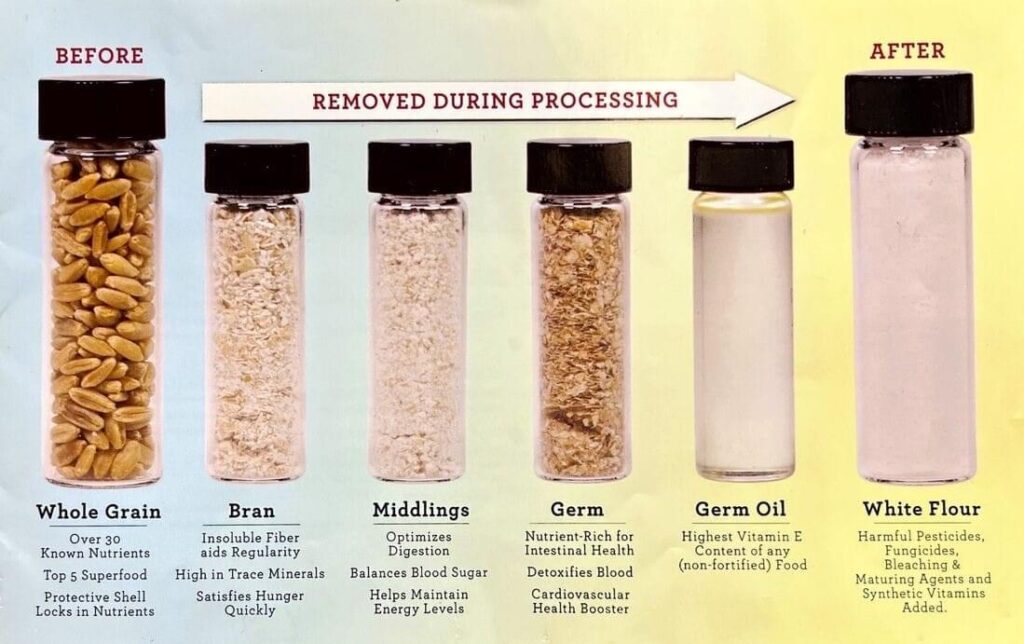
Right in her kitchen, she milled some fresh flour, and the wonderful fragrance alone demonstrated how different this fresh flour was from anything I had experienced before! It wasn’t long after that, I invested in my own home grain mill, the same one I’m using today! Conventional flour may bake beautifully and please the senses, but it is void of nutrition, high in starch, and essentially dead. On top of that, if it isn’t organic, it’s loaded with harmful pesticides and fungicides, not to mention gut-destroying glyphosate.
How we got here
As far as we can go back in history, man has been consuming wheat, grinding it into flour in some fashion. Originally, wheat was stone ground, meaning stones were used to mill the flour and the flour contained all of the nutrients in the wheat kernel itself. As time progressed, the stone milling process became more advanced – from a simple stone mortar in ancient Egyptian times to two large stones placed on top of each other, powered by wind and water. Though even the Egyptians found ways to sift their flour, it was a lengthy process that only royalty could afford. This would have been the first “white” flour, still containing some of the germ oil and bran.
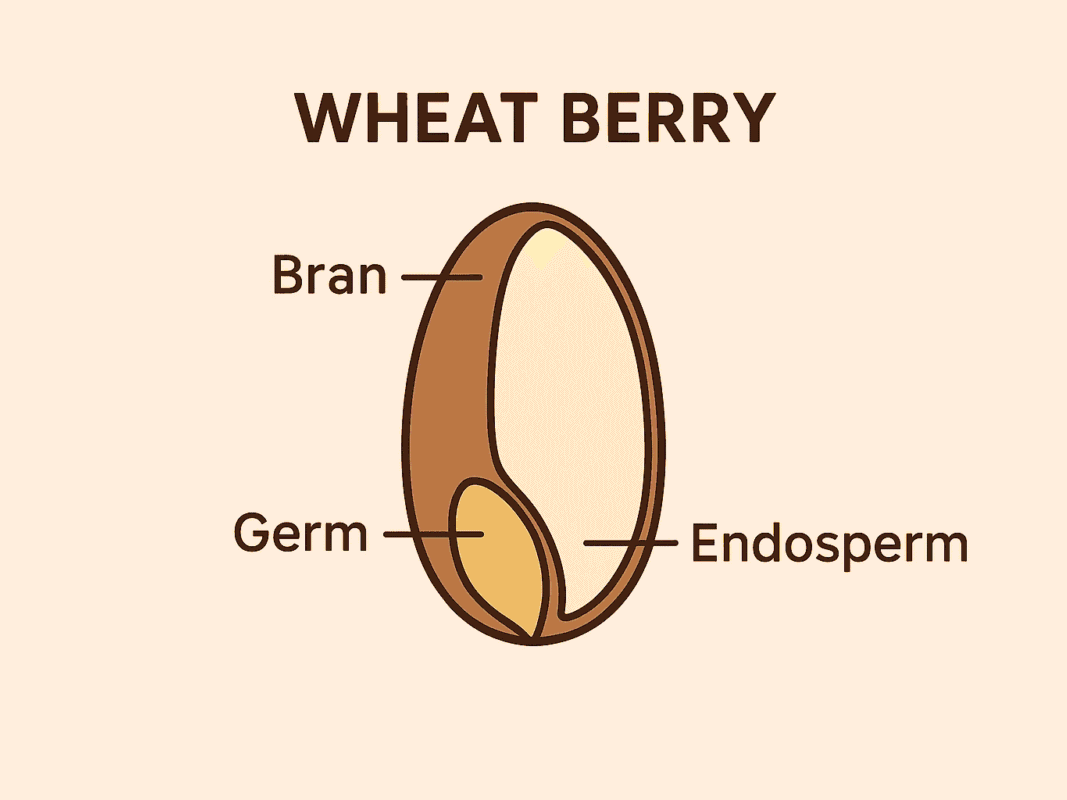
Roller mills were introduced in Europe in the 19th century, and by the 1890s they had revolutionized flour production, replacing most stone mills worldwide. The steel roller mill technology allowed for the efficient separation of the bran and germ from the endosperm, producing brighter, finer, and longer-lasting white flour. By removing the germ, shelf life was extended, preventing rancidity. By removing the bran, bakers were able to produce a softer, fluffier, taller product. No one knew at the time that this advancement would come with a cost.
As white flour became main stream, nutrient-deficiency diseases began to rise. By the 1930s, the average American was only getting one-third of the amount of thiamin compared to when stoneground flour was the only method of milling. This deficiency led to the outbreak of beriberi, a serious nutritional disorder caused by a severe deficiency of vitamin B1 (thiamine), which is essential for nerve function and the breaking down of carbohydrates. Pellagra, caused by a severe deficiency in niacin (vitamin B3), became a major widespread cause of death during this time, beginning with dermatitis, chronic diarrhea, and dementia. Widespread anemia was also seen, characterized by severe fatigue, pale skin, and a lack of red blood cells due to low iron.
Researchers began to document how modern milling practices resulted in the loss of vital nutrients and began to advocate adding synthetic versions of these nutrients back into the flour. In 1941, the U.S. mandated the enrichment of flour by adding three B vitamins (thiamin, riboflavin, and niacin) and the mineral, iron – with folic acid being added in 1998. Though enriching the white flour with these synthetic nutrients eliminated the outbreaks, enriched white flour is a far cry from the stone milled flour of the past.
Back to Milling our own flour
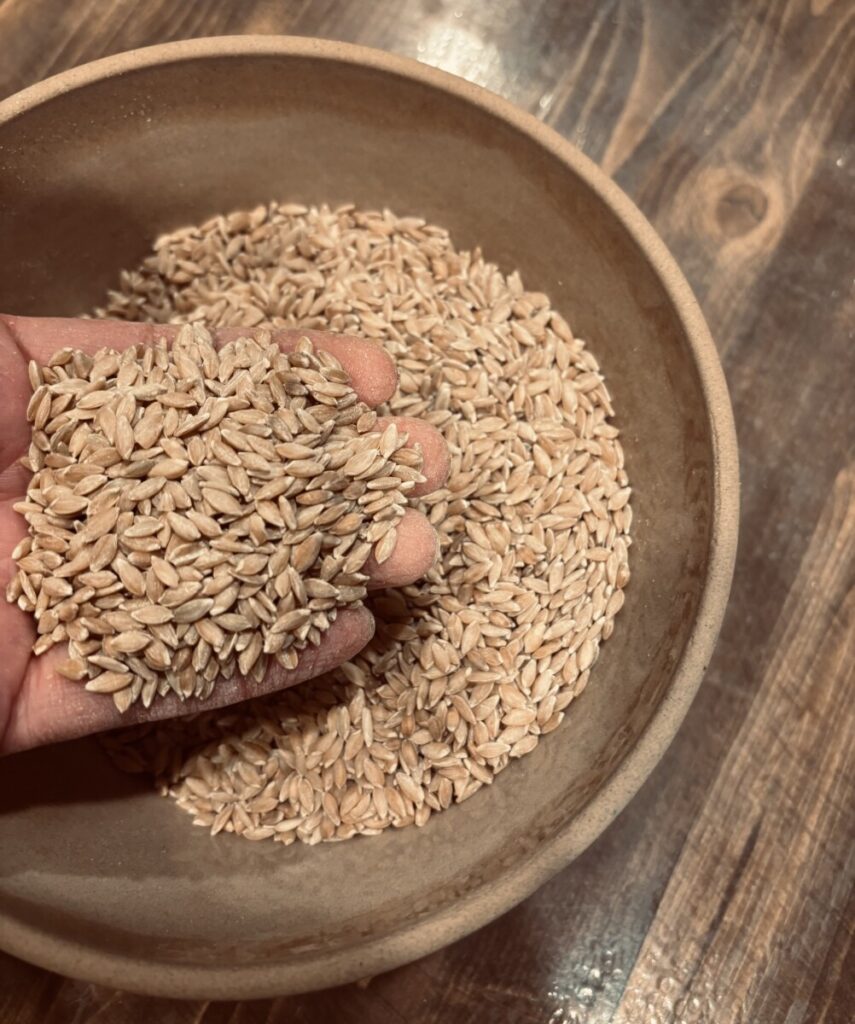
The wheat berry contains 40 of the 44 essential nutrients needed to sustain human life. Only 4 are missing – vitamin A [good sources are fish, eggs, leafy greens], vitamin C [found in citrus and berries], vitamin B12 [high in beef and organ meats], and vitamin D [best from the sun]. Some sources list up to 49 essential nutrients, so I would add in the need for calcium and iodine, but nonetheless, no wonder bread has been a staple in the human diet since the beginning of civilization. With commercial all-purpose flour, only 5 of those 40 were added back in, and in their inferior synthetic form! Even stoneground whole wheat flour found in stores has been processed to remove the bran and germ with some of the bran added back in. They remove the precious germ because the oil is not shelf stable. Alternatively, when you consume freshly milled flour, your body is getting the following:
- All of your B vitamins (with the exception of B12 found primarily in animal products) which help the body produce energy and form red blood cells: Thiamin (B1), Riboflavin (B2), Niacin (B3), Pantothenic Acid (B5), Pyridoxine (B6), Biotin (B7), Folate/Folic Acid (B9), and Cobalamin (B12).
- Loads of Minerals: Iron, Zinc, Magnesium, Manganese, Phosphorus, and Selenium.
- Essential Fatty Acids, including Vitamin E, which is needed by every cell in your body. Grains in their whole form are one of the richest sources of Vitamin E available. Vitamin E protects the integrity of every cell in our body. It keeps free radicals and oxidation away from our cell membranes. When the integrity of the cell is weakened due to a lack of Vitamin E, we are more susceptible to viruses.
When we strip away the bran and the germ, we lose about 86% of the nutrients, not even mentioning the insoluble fiber that is key to cleaning our gut and elimination.
All of the vitamins, minerals, fiber, fatty acids, bran, germ, and vitamin E in whole fresh milled grains work SYNERGISTICALLY together with your body for maximum benefit and digestibility. There is no substitute or way to mimic that bioavailability. Anytime you isolate a nutrient, you are messing with the maximum way for your body to assimilate it.
The wheat berry is a little powerhouse packed with nutrition. Once you mill the wheat berries into flour, it is best to use it immediately or within 1-2 days of milling for optimal flavor and nutritional value.
Modern wheat versus Ancient Grains
So by now, hopefully you see the nutritional benefit to milling your own flour! But, I’d be amiss if I didn’t talk about why quality matters and also the difference between modern wheat and ancient grains. First of all, it is of utmost importance that when purchasing your wheat berries, you are sure to get organic grain. Non-organic wheat is filled with pesticides and herbicides, grown in deficient soil, and in many cases sprayed with glyphosate as a drying agent when harvested. I’m sure you’ve heard the argument that it’s not the gluten causing our issues today but rather the glyphosate sprayed on the wheat. Glyphosate, the active ingredient in Roundup, has been found in the air we breathe, the water we drink, and the food we eat. Even small amounts in the human body act as an antibiotic, destroying the gut and negatively affecting our health. When purchasing grains, I always buy organic and choose a distributor that also tests for glyphosate cross-contamination.
If you’ve read this far and have determined to only use organic fresh milled flour going forward, then you have made a massive step toward healing and vitality! Look up the podcast, “Sue’s Healthy Minutes” with Sue Becker to listen to the countless testimonials and learn more about all the benefits of fresh milled flour.
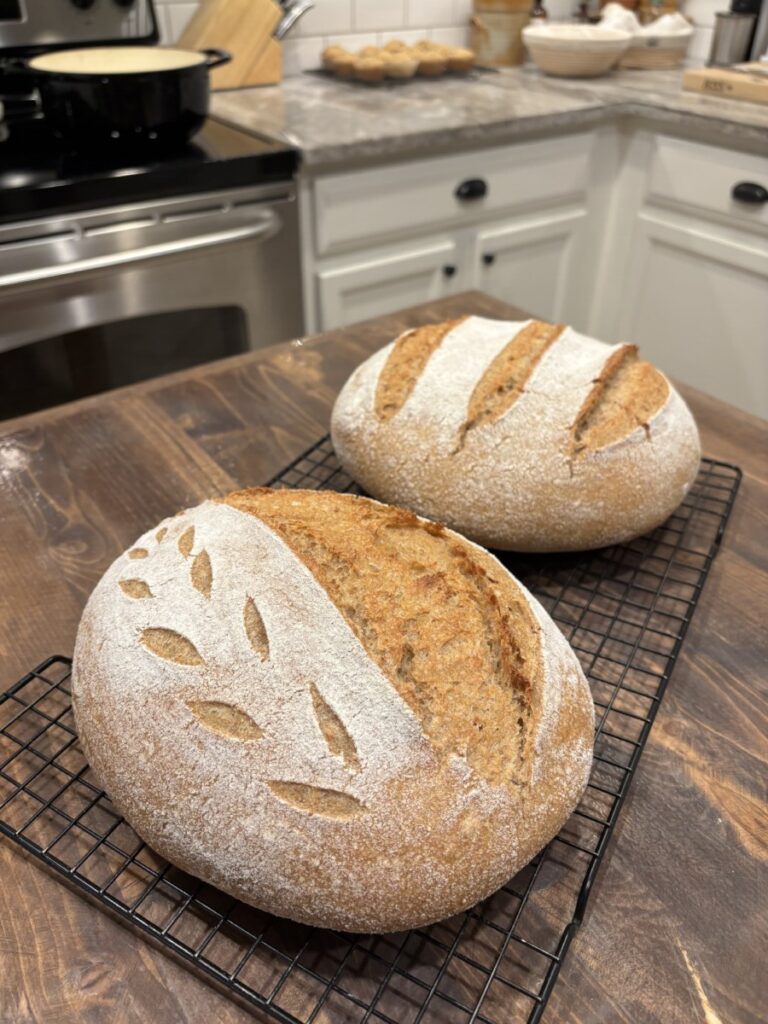
I have gone one step further, and in my home, I have chosen to use only ancient grains. Ancient grains include wheat berry varieties such as einkorn, spelt, khorasan (aka Kamut), and emmer. I also use an heirloom variety of soft white and barely from time to time. Many people see benefits milling modern wheat berries like hard red, hard white and soft white, but I personally feel even better when strictly using ancient grains. Modern wheat has been hybridized over and over for higher yield, drought resistance, and stronger gluten structure. Today’s modern wheat is drastically different from what our ancestors ate thousands of years ago. When I re-introduced fresh milled flour to my family after being gluten free for 10 years, I started with einkorn. I had heard that many gluten sensitive people could consume einkorn without any issues, so we gave it a try! Einkorn is nature’s original wheat and the only non-hybridized wheat in the world. For contrast, einkorn has only 14 chromosomes (2 sets), while modern wheat has 42 (6 sets), contributing to einkorn’s simpler gluten structure and higher nutritional value. Einkorn contains up to 300% more antioxidants than modern wheat. Einkorn, as well as spelt, is high in carotenoids, which reduce the risk of diseases such as cancer and especially macular degeneration. I exclusively made organic fresh milled 100% einkorn sourdough bread for nearly two years before branching out to other ancient grains. There is a learning curve baking sourdough bread with fresh milled flour and even more so, with einkorn. Our favorite sourdough is made with half fresh milled spelt and half fresh milled khorasan (pictured above). It is some of the most delicious, nutrient-dense, satisfying bread you will ever taste! I bake the same loaves for my beloved customers who value organic fresh milled ancient grain sourdough just like I do. I hope you give it a try!
Thanks for reading! In the future, I may delve more into the high nutrition found in ancient grain varieties as well as the benefits of baking these fresh milled grains into sourdough bread! Sourdough has it’s own bragging rights for digestibility and gut health! Happy milling!