
Simple Immune Boosting Elderberry Syrup
Elderberry syrup is naturally high in antioxidants and vitamin C. Boost your immune system naturally, while fighting off colds and viruses! Great for adults and children.
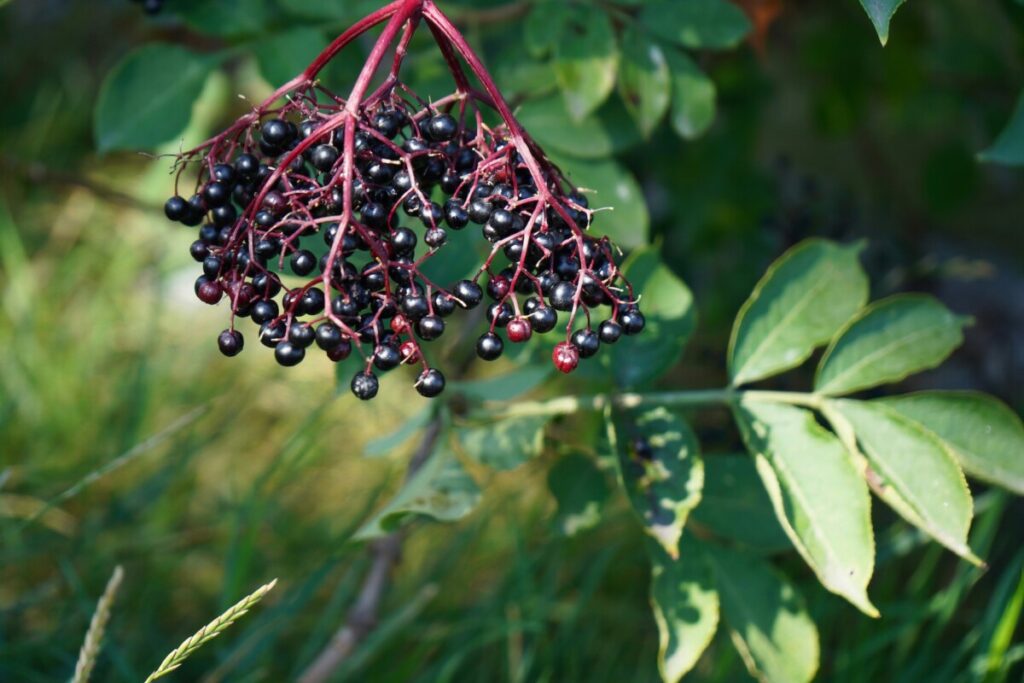
Elderberry syrup is our go-to cold/flu/sinus remedy during the school year. My kids have never had antibiotics and have never had to go to the doctor for being sick. I attribute that to whole food nutrition and natural remedies like this one! Not only is it perfect when sickness strikes, but it can also be taken daily as a preventative! This is so much cheaper than buying it premade at the store, and hands on time for making a batch is under 20 minutes.
Elderberry Health Benefits
- Boosts the immune system
- Fights and protects against bacterial infections
- Fights and protects against viral infections
- Reduces symptoms and duration of the cold or flu
- Helps clear sinus infections
- Removes mucus from the lungs, sinuses, and body
- Decreases inflammation
- High in the antioxidant quercitin
- Anti-carcinogenic effect
- Eases season allergy symptoms
- High in antioxidants, vitamin C, and vitamin A
What is Elderberry?
Elderberries come from the flowering Sambucus elder tree or shrub. They have been a source of nutrition and medicine for thousands of years. In their raw state, they can be toxic to humans but when cooked down and strained, they become a superfood, full of immune boosting, anti-inflammatory properties! Even Hippocrates, the ancient Greek physician known as the “Father of Medicine” revered the elder tree calling it his “medicine chest”.

What other ingredients are in homemade elderberry syrup?
In addition to elderberries, you will add cinnamon, ginger root, cloves, and raw honey. Not only will the spices and honey bring delicious flavor to your syrup, they also pack a impressive punch in making this syrup so effective! Always use organic ingredients when possible to avoid harmful chemicals and pesticides. Keep reading to learn about the benefits of each of these powerhouse ingredients!
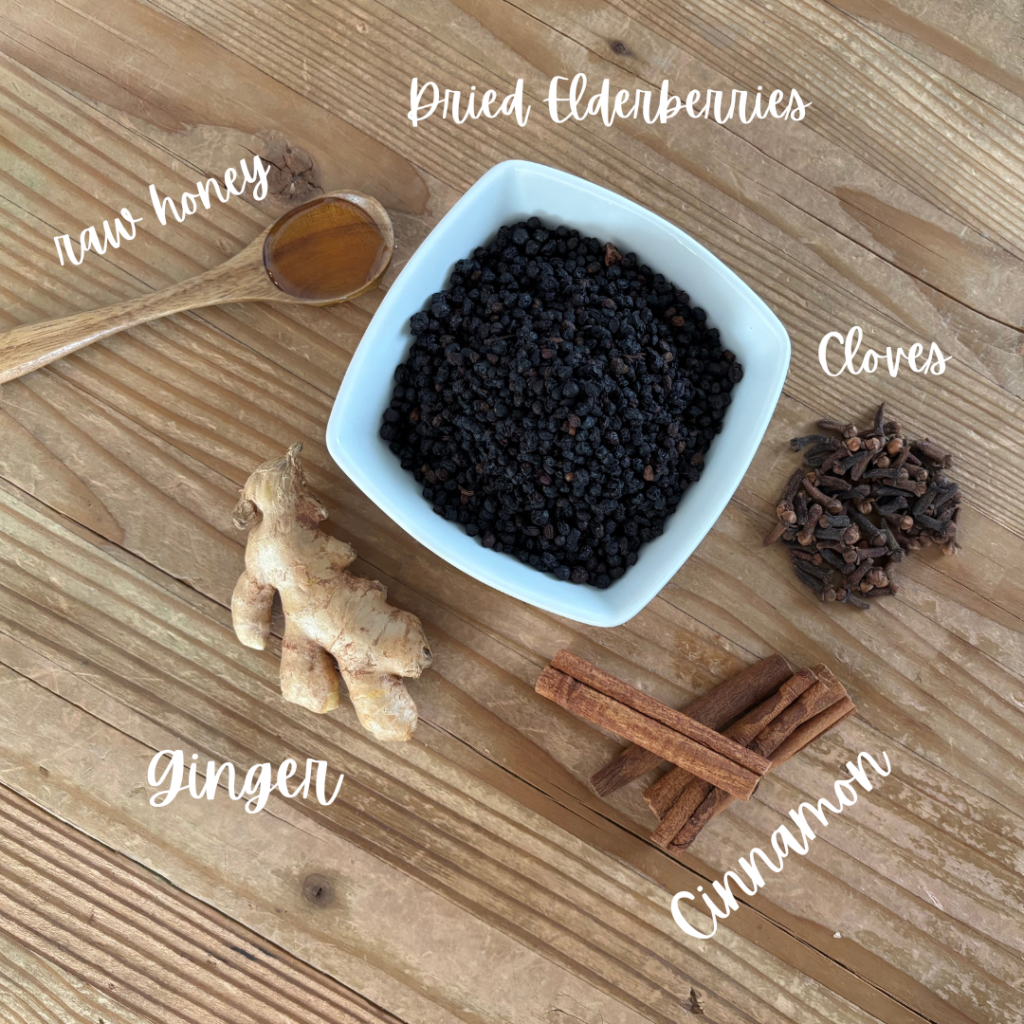
Ceylon cinnamon
Cinnamon is loaded with antioxidant properties that help lower inflammation and fight free radicals. It has also been shown to fight off bacteria, viruses, and fungi. Cinnamon can help improve insulin sensitivity, soothe the gut, and promote healthy metabolism. You may use cassia/Saigon cinnamon, but Ceylon cinnamon is considered “true cinnamon” and has less coumarin, a chemical that can damage the liver in high doses.
Ginger root
Ginger root is known for calming the digestive system, reducing gas and bloating. Specifically, women use it as a natural remedy for nausea during pregnancy. However, did you know that ginger root also contains potent anti-inflammatory compounds that reduce pain and inflammation providing relief rivaling “over-the-counter” pain medications? Ginger is rich in vitamins and minerals, including iron, magnesium, vitamin C, and zinc, as well as antioxidants, all of which can help strengthen the immune system.
Cloves
Cloves are rich in antioxidants, particularly eugenol, which can help neutralize harmful free radicals and protect the cells from damage. They are anti-inflammatory, help improve digestion, and enhance blood circulation. Cloves naturally fight infection, possessing strong antiseptic, antibacterial, and anti fungal properties! The analgesic effects of cloves also make them useful in relieving pain.
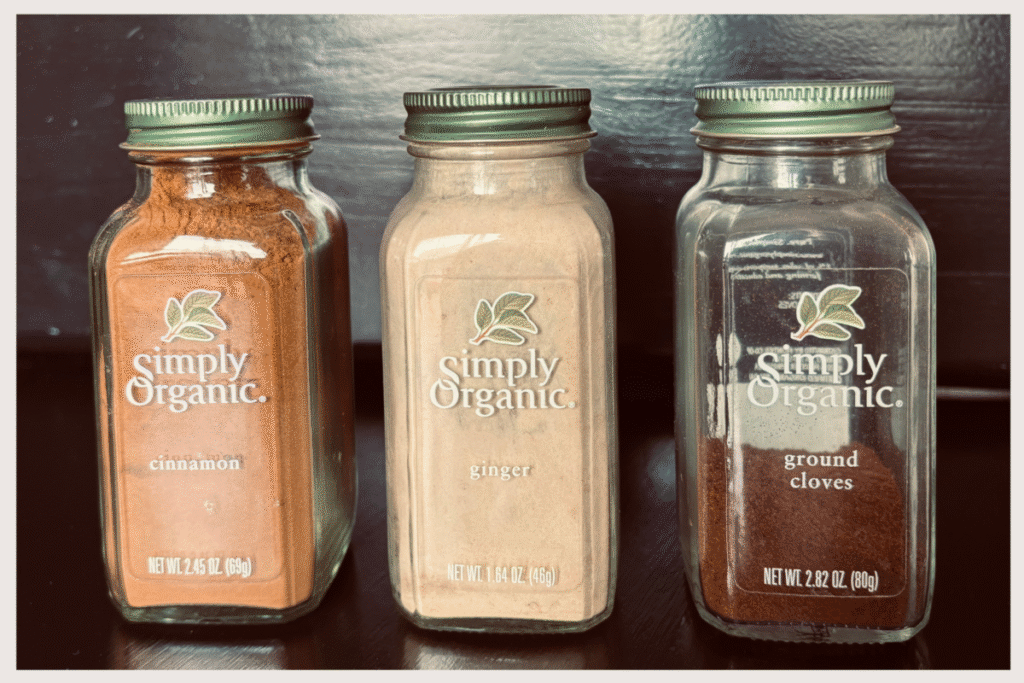
Raw honey
The benefits of raw honey are numerous! Honey’s natural antibacterial and antiviral properties help fight off bacteria and viruses that can cause colds and flu. They can also help prevent infections from taking hold in the first place. Raw honey is high in antioxidants, anti-inflammatory, great for digestion, supports blood sugar regulation, and aids in wound healing. Some studies suggest that raw honey may also help increase the production of white blood cells, which are essential for fighting infection. Honey is soothing to a sore throat and is a natural cough suppressant. If you use local raw honey, it may also ward of seasonal allergies. Be sure to use raw honey because the heat from pasteurization will destroy many of honey’s beneficial properties.
Simple Immune Boosting Elderberry Syrup
Equipment
- medium saucepan
- whisk
- fine mesh strainer
- measuring spoons
- measuring cups
- bowl
- glass jars
Ingredients
- 2/3 cup dried elderberries
- 3 1/2 cups filtered water or spring water
- 2 Tbls dried ginger Alternatively, you may use 2 Tbl grated fresh ginger.
- 1 tsp ground cinnamon
- 1/2 tsp ground cloves
- 1/2-1 cup raw honey Use more or less honey depending on your sweet preference.
Instructions
- Pour the water into a medium saucepan and add the elderberries, ginger, cinnamon, and cloves. Do not add honey yet because we do not want to heat the honey and destroy the delicate beneficial properties. Stir and bring pot to boil.
- Once boiling, reduce to low heat and cover partially with a lid, so that steam can escape. Allow to simmer for about 45 minutes or until the liquid is reduced by half.
- Remove from heat and let cool slightly.
- Strain liquid through a fine mesh strainer into a bowl, pushing on the berries with the back of a spoon to ensure all liquid is removed.
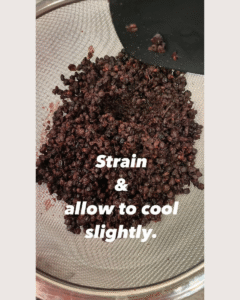
- Discard the elderberries and allow liquid to cool to lukewarm.
- Stir in the 1/2 cup raw honey. You may use up to 1 cup of honey, depending on how sweet you want your syrup to be.
- Pour into jars and store in the refrigerator.
Notes
Common Questions:
- Does elderberry syrup expire? Homemade elderberry syrup will typically last 2-3 months in the refrigerator. We go through it pretty quickly if fighting off a bug because we’re taking it several times a day. If you notice it’s been sitting in the fridge for a bit without use, remember you can take it daily to keep your body healthy and immune system strong! You can also freeze the elderberry syrup in ice cube trays for up to 6 months and pull it out to thaw when needed.
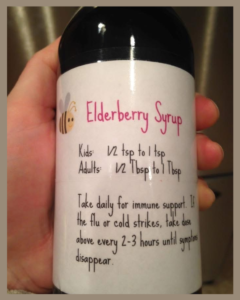
- How much elderberry syrup should I take and how often? I recommend 1 tsp for kids and 1 Tbsp for adults once a day for general health benefits. If sickness strikes, then take the recommended dose every 2-3 hours until symptoms disappear.
- Can I use a different sweetener other than honey? If you are giving elderberry syrup to a child under one year old, you will want to use another type of sweetener; however, I do recommend using honey in every other case if possible, due to honey’s unique medicinal properties, mentioned above!
- Do I need to rehydrate the dried elderberries before using them in this recipe? Nope! Simply add them to the water with all the ingredients, except the honey. The simmering water rehydrates them.
- Are there any ways I can use the elderberries after making syrup with them, like in a smoothie or baked good? It’s not recommended to “reuse them” due to the seeds inside that can be toxic. Just strain them really well, squeezing out every last bit of juice and discard. After simmering, the elderberries are spent anyway, already maximizing their medicinal benefit!
Do I have to dehydrate my fresh elderberries or how can I use them in this recipe?
Hi Donna! I’m sorry I missed your comment! Hopefully, you’ve found your answer by now, but no, you do not need to dehydrate your elderberries first. With fresh elderberries (blue-black variety), use 8 cups of berries and just 1 cup of water. The natural juice in the berries will make up for the little amount of water added! Wash them and remove all the stems first. Once simmering, add in spices. Continue to simmer for at least 30 minutes before straining out skins and pulp. Return elderberry juice to pan and reduce by half. Cool slightly and add honey to warm syrup!